
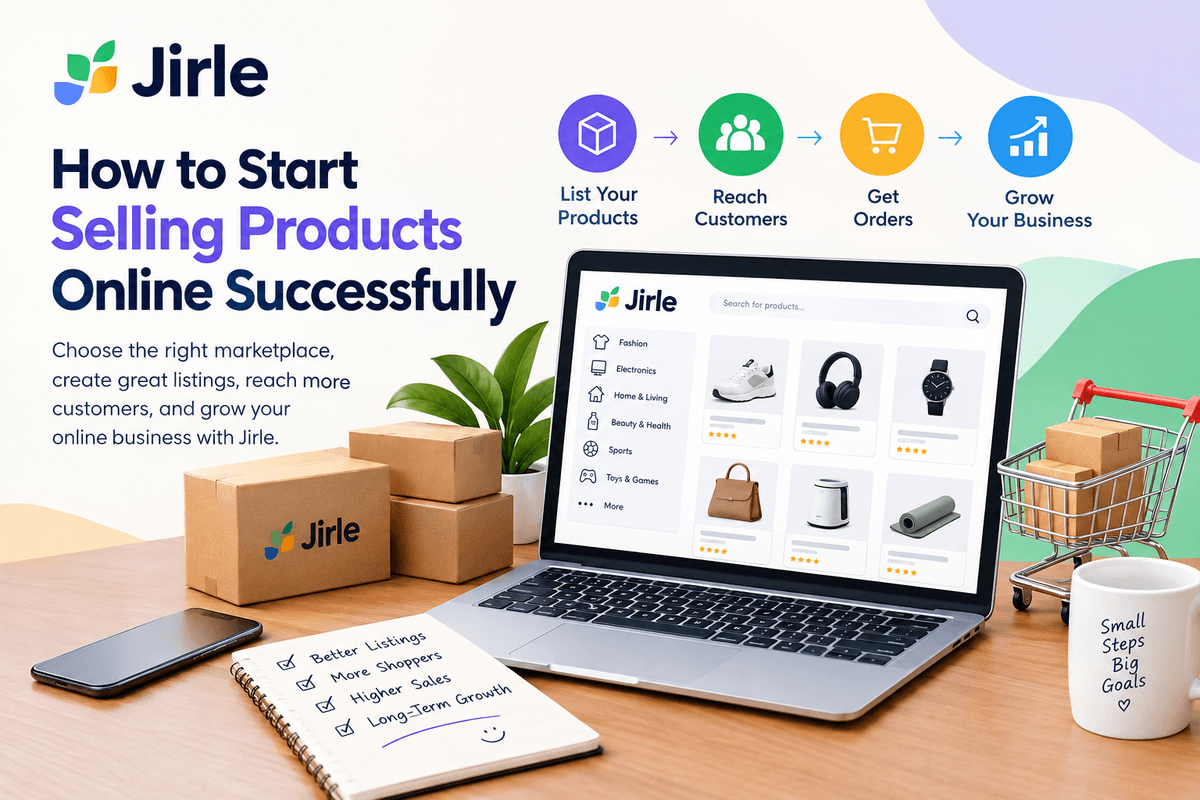
How to Start Selling Products Online Successfully
Selling products online has become one of the most accessible ways for businesses, entrepreneurs, and independent sellers to reach customers. Whether you are launching a new product, expanding an existing business, or looking for a new sales channel, an online marketplace can provide the tools and audience needed to start selling.
However, successfully selling online involves more than simply uploading a product and waiting for orders. Sellers need attractive product listings, competitive pricing, reliable shipping, strong customer service, and a strategy for attracting customers.
Choosing the right marketplace can also make a significant difference.
A platform such as Jirle gives sellers an opportunity to create an online presence, list products, connect with customers, and manage their sales from one place.
This guide explains how to start selling products online and the important steps to consider when building an online selling business.
Why Sell Products Online?
The internet allows businesses to reach customers beyond their local area.
A physical store may depend heavily on people who live nearby or happen to visit the location. An online store or marketplace can potentially introduce products to customers across different cities, regions, and countries.
Selling online can also provide flexibility.
Depending on the business, sellers can:
Add products without opening a physical store
Reach customers outside their local area
Sell multiple products from one account
Manage orders online
Communicate with customers
Promote products digitally
Build an online storefront
Expand their product selection over time
For new sellers, this can create an opportunity to test products and learn what customers are interested in before making larger investments.
For established businesses, selling online can provide another way to reach customers and grow sales.
What Is an Online Marketplace?
An online marketplace is a platform where multiple sellers can offer products to customers.
Instead of building an entire eCommerce website from scratch, sellers can use a marketplace to create listings and present their products within an established online environment.
A marketplace can bring together sellers, products, and customers in one place.
For sellers, this can simplify the process of getting started.
For customers, marketplaces can make it easier to discover different products and compare options.
Jirle is designed as an online marketplace where sellers can list and sell products while customers can discover products and connect with sellers.
This marketplace model gives sellers an opportunity to build their online presence without needing to develop every part of an eCommerce platform themselves.
Decide What You Want to Sell
Before creating your first product listing, determine exactly what you want to sell.
Your products could be:
Clothing
Electronics
Home products
Beauty products
Accessories
Office products
Sporting goods
New consumer products
Specialty products
Other physical goods
The most important consideration is whether there is a clear customer for the product.
Research Your Product
Take some time to understand the market before investing heavily in inventory.
Consider questions such as:
Who is likely to purchase the product?
What problem does it solve?
What makes the product different?
How much are similar products selling for?
What are customers looking for?
What shipping costs should you expect?
What margin can you realistically make?
Research does not need to be complicated.
Searching marketplaces, examining product listings, and understanding customer demand can help you make better decisions.
Create a Strong Product Listing
Your product listing is one of the most important parts of selling online.
Customers cannot physically hold or examine your product before purchasing it. Your listing needs to provide enough information to help them understand exactly what they are buying.
A strong listing should include:
A clear product title
High-quality product images
An accurate description
Product specifications
Available sizes or variations
Price
Shipping information
Inventory availability
The goal is to answer the customer's questions before they need to ask them.
Write Clear Product Titles
A product title should immediately tell customers what the product is.
Avoid titles that are vague or difficult to understand.
Instead, describe the product using relevant information such as the product type, brand, model, material, size, colour, or other important characteristics.
For example, instead of:
Great New Product
A better title might be:
Women's Lightweight Waterproof Running Jacket
The second title immediately communicates what the customer is looking at.
Write Useful Product Descriptions
A product description should explain what the product does and why a customer may want it.
Focus on useful information rather than filling the description with unnecessary marketing language.
Include details such as:
Main features
Materials
Dimensions
Compatibility
Size information
Usage instructions
What's included
Care information
Clear descriptions can reduce confusion and help customers make informed purchasing decisions.
Use High-Quality Product Images
Product photography can have a major impact on online sales.
Customers often make an initial judgment based on the images they see.
Whenever possible, use clear, well-lit images that show the product from different angles.
Depending on the product, consider including:
Front view
Back view
Side view
Close-up details
Product packaging
Product being used
Different colours or variations
Size references
The images should accurately represent the product.
Avoid using images that make the product appear significantly different from what the customer will receive.
Set a Competitive Price
Pricing is another important part of selling online.
Your price needs to account for more than the cost of the product.
Consider:
Product cost + packaging + shipping + marketplace fees + other expenses = total selling cost
Your selling price should leave enough room for a reasonable profit.
At the same time, customers will often compare similar products before purchasing.
That means your pricing should make sense within the market.
Do Not Compete Only on Price
The lowest price does not always win.
Customers also consider:
Product quality
Shipping speed
Seller reputation
Product presentation
Customer service
Return policies
Convenience
Availability
A well-presented product with reliable service can compete successfully without always being the cheapest option.
Make Shipping Simple
Shipping is a major part of online selling.
Customers want to understand how much shipping will cost and when they can expect their order.
As a seller, you should determine:
Where you ship
Available shipping methods
Shipping costs
Processing time
Packaging requirements
Tracking availability
Return shipping procedures
Clear shipping information can help reduce customer confusion.
Package Products Carefully
Your responsibility does not end when an order is placed.
Products need to arrive safely.
Use appropriate packaging based on the product. Fragile items may require additional protection, while clothing and other durable products may need simpler packaging.
A damaged package can create a poor customer experience even if the product itself was excellent.
Communicate With Customers
Online selling still depends on relationships.
Customers may have questions before purchasing or need assistance after placing an order.
Responding promptly and professionally can help create confidence in your store.
Common customer questions may involve:
Product availability
Sizing
Shipping
Delivery times
Product specifications
Returns
Order status
Clear communication can turn a simple transaction into a positive customer experience.
Build Your Seller Reputation
Trust is important when customers purchase from an unfamiliar seller.
Your marketplace presence should make it easy for customers to understand who they are buying from.
Maintain accurate product information, communicate clearly, ship orders on time, and handle issues professionally.
Over time, consistent service can help establish a strong reputation.
Deliver What You Promise
One of the simplest ways to build trust is to make sure your listings accurately represent what customers receive.
If your listing says an item ships within a certain timeframe, try to meet that expectation.
If an item has a specific feature, make sure it actually has that feature.
Accuracy matters.
Use an Online Marketplace to Grow
Building an independent online store can be valuable, but it also requires time and resources.
You may need to manage:
Website development
Hosting
Payment processing
Product pages
Security
Customer accounts
Marketing
Shipping
Analytics
Technical maintenance
An online marketplace can simplify some of these responsibilities by providing an existing platform for sellers.
Instead of starting completely from scratch, sellers can focus more of their attention on products, customers, and growing their business.
Why Jirle Can Be Useful for Sellers
Jirle provides sellers with a marketplace environment where they can list products and connect with customers online.
The idea is straightforward: give sellers a place to showcase what they sell while giving customers a convenient way to discover products.
For sellers getting started online, having a dedicated marketplace can provide a simpler path to establishing an online presence.
Sellers can focus on building their product selection, creating quality listings, communicating with customers, and fulfilling orders.
As the business grows, sellers can continue adding products and improving their marketplace presence.
Add More Products Over Time
Once you have established your first products, consider expanding your selection.
Adding related products can help customers discover more of what you sell.
For example, a seller offering fitness equipment might add:
Resistance bands
Yoga accessories
Workout equipment
Water bottles
Fitness accessories
A clothing seller might expand into:
Tops
Bottoms
Jackets
Accessories
Seasonal products
The key is to expand strategically rather than adding products without considering demand.
Promote Your Products
Creating a listing does not mean customers will automatically find it.
Promotion can help increase visibility.
Sellers can promote products through channels such as:
Social media
Email marketing
Content marketing
Search engines
Online communities
Existing customers
Business websites
Social media can be particularly useful for visually appealing products.
A product demonstration, customer experience, short video, or useful product tip can encourage people to visit your marketplace listings.
Track What Is Working
Growing an online selling business requires learning from your results.
Pay attention to:
Products receiving the most attention
Products generating the most sales
Customer questions
Repeat purchases
Inventory levels
Shipping issues
Product performance
Marketing results
You may discover that certain products consistently perform better than others.
That information can help guide future inventory and marketing decisions.
Learn From Customer Behaviour
Customers provide valuable information through their actions.
If people repeatedly view a product but do not purchase it, something may need improvement.
The issue could be:
Price
Product information
Images
Shipping cost
Availability
Customer confidence
Rather than immediately removing the product, examine the listing and consider what could be improved.
Provide Excellent Customer Service
Customer service can differentiate one seller from another.
Even when something goes wrong, a professional response can make a significant difference.
If an order is delayed, communicate with the customer.
If an item arrives damaged, follow your return or replacement process.
If a customer has a question, provide a clear answer.
Good customer service can encourage customers to return and recommend your store to others.
Keep Improving Your Marketplace Store
Successful online sellers rarely leave their store unchanged.
Products change. Customer expectations change. Markets change.
Continue reviewing your listings and improving them.
You might update:
Product images
Descriptions
Titles
Shipping information
Product variations
Store presentation
Promotional strategies
Small improvements can make a meaningful difference over time.
Start Selling Online With a Long-Term Mindset
Selling online can be exciting, but building a successful business usually takes time.
You may not receive a large number of orders immediately.
The early stages are an opportunity to learn.
Understand what customers respond to. Improve your listings. Test different products. Provide reliable service. Build trust.
Over time, those efforts can create a stronger marketplace presence.
The most successful sellers focus on the entire customer experience rather than simply trying to make a quick sale.
Start Selling With Jirle
Starting an online selling business does not have to mean building everything from the ground up.
With an online marketplace such as Jirle, sellers can create product listings, showcase their products, reach customers, and build their online presence in one place.
Whether you are an established business looking for another sales channel or an entrepreneur preparing to sell your first product online, the fundamentals remain the same.
Choose products customers want. Create clear listings. Use strong images. Set sensible prices. Offer reliable shipping. Communicate with customers. Learn from your results and continue improving.
Online selling is not just about putting products on the internet.
It is about creating a shopping experience that makes customers comfortable discovering, purchasing, and returning to your store.
Jirle gives sellers a place to do exactly that: list products, reach customers, and grow online.